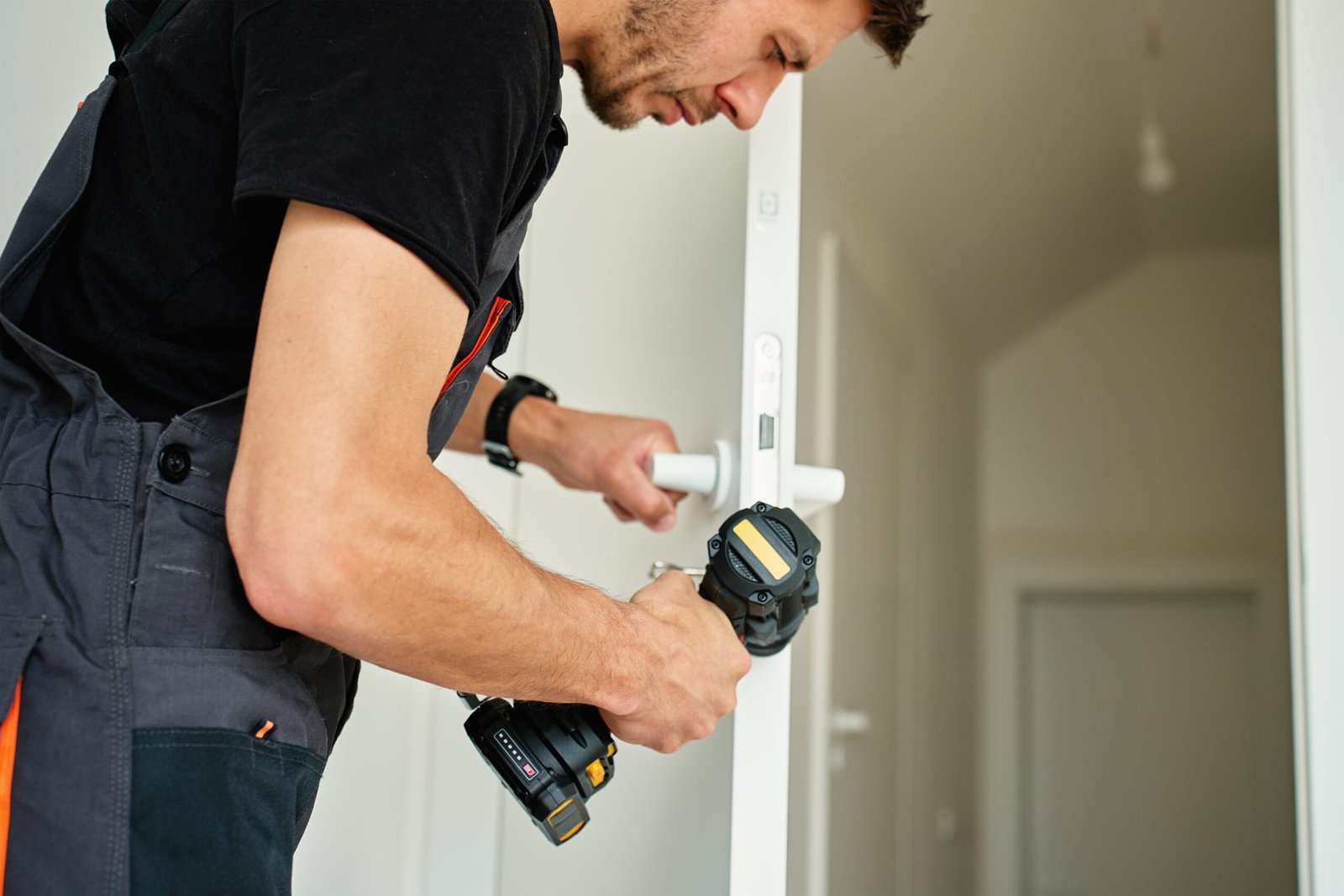
If you’re planning to replace the internal doors in your home, one of the first questions you’re likely to ask is: how much does it cost to fit an internal door?
The answer depends on what you’re comparing.
Some prices you’ll see online are for fitting only, where you buy the door and ironmongery yourself. Others include the door, handles and professional installation. The type of door, its finish and the condition of your existing frames can also affect what you ultimately pay.
At The Door Fitting Company, our typical supplied and fitted internal door prices start from around £120 for a hollow-core door, £200 for a solid-core door and £300 for a glazed door. These prices include professional fitting and handles.
Pre-finished doors generally add around £50 per door, while sliding, bi-fold and custom-height doors will usually cost more because of their additional requirements.
Let’s look at what you’re actually paying for and why internal door fitting quotes can vary so much.
How Much Does It Cost to Fit an Internal Door in the UK?
There isn’t one standard UK price for internal door installation.
Current industry cost guides demonstrate just how wide the market can be, particularly when fitting-only services, different door specifications and more complicated installations are grouped together.
For homeowners, a more useful starting point when considering how much does it cost to fit an internal door is to establish exactly what is included in the price.
At The Door Fitting Company, typical supplied-and-fitted prices are:
Door type Typical supplied & fitted price
Hollow-core internal door From around £120
Solid-core internal door From around £200
Glazed internal door From around £300
Pre-finished door Typically around £50 extra per door
These aren’t fitting-only prices. The door, professional installation and handles are included.
That distinction is important when comparing quotes on how much does it cost to fit an internal door.
A £100 fitting quote might initially look cheaper than a £200 supplied-and-fitted price, for example. But if you still need to purchase the door, handles, hinges and arrange delivery separately, you aren’t comparing like for like.
What Affects the Cost of Fitting an Internal Door?
Two homes can require apparently similar replacement doors but end up with different installation requirements.
The main factors affecting the overall cost include the type and construction of the door, its finish, the existing opening and frame, the ironmongery required and whether you’re buying a fitting-only or complete supply-and-fit service.
1. The Type of Internal Door
The door itself is one of the biggest influences on the answer to how much does it cost to fit an internal door.
A lightweight hollow-core door is generally less expensive than a solid-core or glazed design.
For example, The Door Fitting Company’s range includes hollow-core doors such as the 6 Panel and Dordogne, alongside solid-core designs including the Pre-finished Carini, White Mexicano and Pre-finished Mexicano.
There are also numerous glazed solid-core options, including the Mexicano Half Light, Mexicano Glazed 6L and Vancouver Glazed 4 Light.
Hollow-core doors provide a practical option when keeping costs down is important. Solid-core doors cost more but provide a heavier, more substantial feel and can offer better sound reduction and durability.
Glazed doors tend to sit at a higher price point because the door itself is more expensive.
This is why ‘how much does it cost to fit an internal door’ without specifying the type can produce a misleading answer.
2. Pre-Finished vs Unfinished Doors
The finish can affect your budget too.
An unfinished door needs to be finished after purchase, usually with a suitable paint, oil or varnish depending on the product.
A pre-finished door arrives with its factory finish already applied. This increases the initial price of the door but removes the need to arrange that finishing afterwards.
At The Door Fitting Company, choosing a pre-finished option typically adds around £50 per door.
When comparing the two, think about the finished cost rather than the purchase price alone. A cheaper unfinished door may still require materials and additional time before you achieve the appearance you want.
3. The Condition of Your Existing Door Frames
Replacing an internal door doesn’t necessarily mean replacing the frame.
If the existing frame is sound, appropriately sized and suitable for the new door, it can often be retained.
However, existing frames aren’t always perfectly straightforward.
Older properties in particular can have openings that aren’t completely square or frames that have moved over time. Previous alterations, layers of paint and changes to flooring can also affect how a replacement door needs to be fitted.
If significant work is required to an existing opening or frame, the installation becomes more involved than hanging a standard door into a suitable opening.
This is one reason a survey before ordering is valuable. It allows the opening and requirements to be assessed rather than assuming every doorway in the house is identical.
4. Door Size and Non-Standard Openings
Standard-sized doors are generally the simplest option where the existing openings allow them.
Not every home has standard openings, though.
Older properties, extensions and previously altered homes can contain unusual heights or widths. If a standard door isn’t suitable, a different product or custom-height solution may be required.
Custom-height doors normally increase the cost because you’re moving away from a straightforward standard installation.
Accurate measuring matters here. Ordering a door because its advertised dimensions appear close to your existing one can be an expensive mistake if it can’t be suitably adjusted for the opening.
5. Handles, Hinges and Other Ironmongery
Ironmongery is another area where quotes can look similar without actually including the same things.
The term covers components such as:
- handles;
- hinges;
- latches;
- locks; and
- other door hardware.
A standard internal door with a conventional latch is generally more straightforward than a door requiring more complex hardware.
At The Door Fitting Company, customers can choose from a selection of handles and ironmongery, and our supplied-and-fitted prices include handles.
When comparing another quote on how much does it cost to fit an internal door, check whether the advertised price includes fitting the handles and hinges or whether you’re expected to purchase and supply them separately.
A low headline fitting price isn’t particularly helpful if several necessary parts are added afterwards.
6. Standard, Sliding and Bi-Fold Doors
The way a door operates can also change the installation cost.
A conventional hinged internal door is generally the most straightforward installation.
Sliding and bi-fold doors require different hardware and installation methods, so they normally cost more than fitting a standard hinged door.
The same applies to unusual or bespoke installations.
If you’re considering something other than a conventional internal door, it is better to have the opening assessed and receive a quote for that particular installation rather than relying on an average per-door figure.
7. Labour and Installation Complexity
Professional door fitting involves considerably more than attaching hinges and putting the door into the frame.
Depending on the installation, the fitter may need to check and adjust the door for the opening, position and recess hinges, hang and align the door, fit the latch and handles and make sure the finished door opens and closes correctly.
Small differences in an existing opening can make this work more time-consuming.
That helps explain why you’ll find such a wide range of labour prices online. Checkatrade’s internal door fitting cost guide shows that UK prices vary depending on factors such as the door type, hardware, frame condition and the complexity of the installation.
The most useful quote is therefore one based on the actual doors and openings in your home rather than a generic national average.
Supply and Fit vs Fitting Only: What’s the Difference?
This is one of the most important distinctions to understand when researching internal door installation costs.
With fitting only, you normally purchase the doors yourself. Depending on the door fitter, you may also need to supply the handles, hinges and other hardware.
Your total project cost therefore looks more like:
Door + delivery + ironmongery + fitting + finishing (where required) + any additional work
A supply-and-fit internal door service brings more of those elements together.
At The Door Fitting Company, we specialise in supplying and fitting internal doors rather than providing general carpentry services. Once you’ve selected your doors, we arrange a home survey to confirm sizes and requirements before installation.
The benefit isn’t simply convenience. It also reduces the risk of ordering doors that aren’t suitable for the openings and gives you a much clearer idea of what the completed installation will cost.
If you’re considering buying your doors separately, read our guide to Supply and Fit Internal Doors: Is It Better Than Buying Doors Yourself? before deciding.
Why Do Internal Door Fitting Quotes Vary So Much?
Search online and you can find dramatically different prices for what appears to be the same job.
Usually, there is a reason.
One quote might cover labour to hang a customer-supplied hollow-core door into a straightforward existing frame. Another might include a solid-core door, handles, hinges, delivery, measuring and professional installation.
Both may be described as the cost of fitting an internal door, but they aren’t equivalent services.
Before comparing prices, ask:
- Is the door included?
- What type and construction of door is included?
- Are handles, hinges and latches included?
- Is a survey or measuring service included?
- Does the quote include fitting into the existing frame?
- Is finishing included or is the door already pre-finished?
- Is delivery included?
- Is removal or disposal of the old door included?
- Are there additional charges for non-standard doors or openings?
Once you know those answers, comparing quotations becomes considerably easier.
Does It Cost Less to Have Several Internal Doors Fitted?
Some companies reduce their per-door fitting rate when several doors are installed at the same time.
The Door Fitting Company takes a different approach: we don’t change our price depending on the number of doors you’re having fitted.
Whether you’re replacing one internal door or upgrading doors throughout the house, our pricing is designed to be clear from the outset rather than relying on quantity discounts to reach the advertised price.
For a whole-home project, the overall cost will therefore depend primarily on the number and types of doors you choose.
As a simple illustration, six hollow-core doors at a typical supplied-and-fitted price of around £120 each would be approximately £720, while six solid-core doors at around £200 each would be approximately £1,200.
The actual quotation will depend on the doors and installation requirements confirmed for your property.
Is Disposal of the Old Doors Included?
When considering ‘how much does it cost to fit an internal door’, this is an easy cost to overlook.
Disposal of existing doors isn’t included in The Door Fitting Company’s standard pricing, so customers are responsible for disposing of their old doors.
If it makes disposal easier, however, we can cut the old doors in half for you.
It’s worth checking this point with any installer before accepting a quotation because waste removal isn’t automatically included by every door fitter.
Is It Cheaper to Buy the Door and Pay for Fitting Separately?
Sometimes it can be, particularly if you’ve found a door at a very low price and already know that it’s suitable for the opening.
But the door’s purchase price isn’t the complete cost.
You need to account for delivery, suitable ironmongery, installation and finishing if required. You’re also responsible for making sure you’ve ordered the correct size and specification.
If an installer arrives and discovers that the door you’ve purchased isn’t suitable, resolving that problem can quickly wipe out the saving you hoped to make.
For homeowners who are confident about measurements and door specifications, buying separately can still make sense.
For those who would rather have the measuring, door selection and installation connected, a supply-and-fit service offers a more straightforward alternative.
How Can I Get an Accurate Price for My Internal Doors?
Online price guides are useful for establishing a budget, but they can’t tell you exactly what your home needs.
The most reliable way to establish how much does it cost to fit an internal door is to assess the openings and decide which doors you actually want.
At The Door Fitting Company, our process starts with choosing your preferred doors followed by a free home survey to confirm the sizes and installation requirements.
You can then make your decision based on the actual job rather than an online estimate.
How Much Should You Budget to Fit Internal Doors in 2026?
For a straightforward summary, typical supplied-and-fitted prices from The Door Fitting Company start at around:
£120 for a hollow-core internal door, £200 for a solid-core internal door and £300 for a glazed internal door, including handles and professional fitting.
Pre-finished doors typically add around £50 per door, while sliding, bi-fold and custom-height doors normally cost more.
The important thing when comparing quotations on how much does it cost to fit an internal door isn’t simply to find the lowest number.
Establish what you’re getting for that number.
A clear quote should tell you which door you’re buying, what hardware is included, what installation involves and whether there are any additional costs you need to plan for.
Book Your Free Internal Door Survey
If you’ve been wondering how much does it cost to fit an internal door and you’re considering replacing your internal doors in Colchester, Ipswich, Clacton or the surrounding areas, The Door Fitting Company can help you understand your options and what they’ll cost.
We specialise exclusively in internal doors, providing the doors, handles and professional fitting through one straightforward service.
Book a free home survey today and we’ll confirm your measurements and requirements, help you choose suitable doors and provide clear pricing for your installation.
Frequently Asked Questions
How much does it cost to fit an internal door?
If you’re looking for a complete supplied-and-fitted service rather than labour alone, The Door Fitting Company’s typical prices start from around £120 for a hollow-core internal door and £200 for a solid-core door, including handles and fitting. Glazed doors typically start at around £300.
How much does it cost to fit a solid-core internal door?
At The Door Fitting Company, a typical solid-core internal door costs from around £200 supplied and fitted with handles. The exact price depends on the door selected and installation requirements.
Are handles included in internal door fitting?
It depends on the company and quote. The Door Fitting Company’s supplied-and-fitted prices include handles, with customers able to choose from available handle and ironmongery options.
Can a new internal door be fitted into my existing frame?
Often, yes. If the existing frame is in suitable condition and the opening is compatible with the new door, it may not need replacing. A survey can identify any issues before the doors are ordered.
Does a pre-finished internal door cost more?
Generally, yes. At The Door Fitting Company, a pre-finished door typically adds around £50 per door. The benefit is that the factory finish is already applied, so you don’t need to arrange finishing afterwards.
Do you dispose of old internal doors?
Disposal of old doors isn’t included within The Door Fitting Company’s standard pricing. Customers are responsible for disposal, although we can cut old doors in half if required to make them easier to handle and transport.